
|
 |
 |
Russian Cities |
|
|
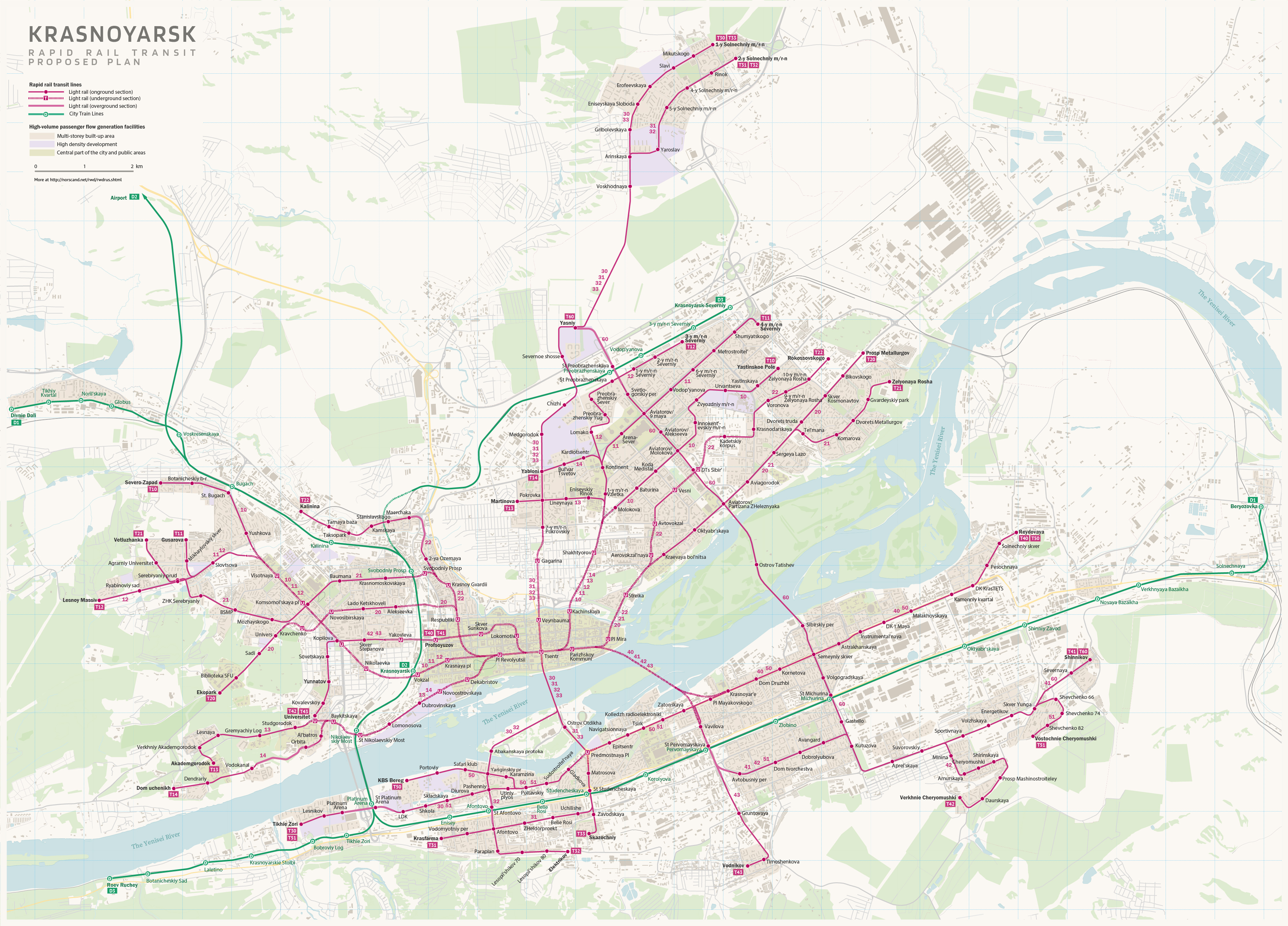
Krasnoyarsk, Eastern Russia. Rapid rail transit plan. Krasnoyarsk is the sixth-largest city in Russia located on the Yenisey river, with a population of over 1.2 million residents, up to 1.4 million residents in the metro area. Public transport in Krasnoyarsk includes buses, trolleybuses, trams. Construction of the metro system began in 1995 but was halted in 2010 due to a lack of funding. In 2023, construction resumed under a revised plan that replaces the metro with an 11-kilometer underground light rail transit (LRT) line featuring 6 stations (shown on the map as the section covering routes 10, 11, and 12, stretching from the Vysotnaya station to the Molokova station). The project is scheduled for completion by 2028. The current LRT plan has several significant drawbacks: its route does not reach major residential areas; the stations are spaced too far apart, forcing potential passengers to rely on additional feeder transport; and there is no surface-level tram network connected to the main line that would allow for through-service. The proposed alternative addresses all these shortcomings, linking the city’s primary hubs and areas into a unified network within walking distance—effectively solving the "last mile" problem. This proposed LRT network spans a total of 165 km (including 39 km underground) and comprises 6 lines with 19 routes, serving 247 stations and stops, 34 of which are underground. Additionally, the plan introduces City Train network utilizing existing railway corridors, with only minimal new track construction required. This network would span 79 km, including a newly constructed 28-km branch line connecting to the city airport. |
|
|
|
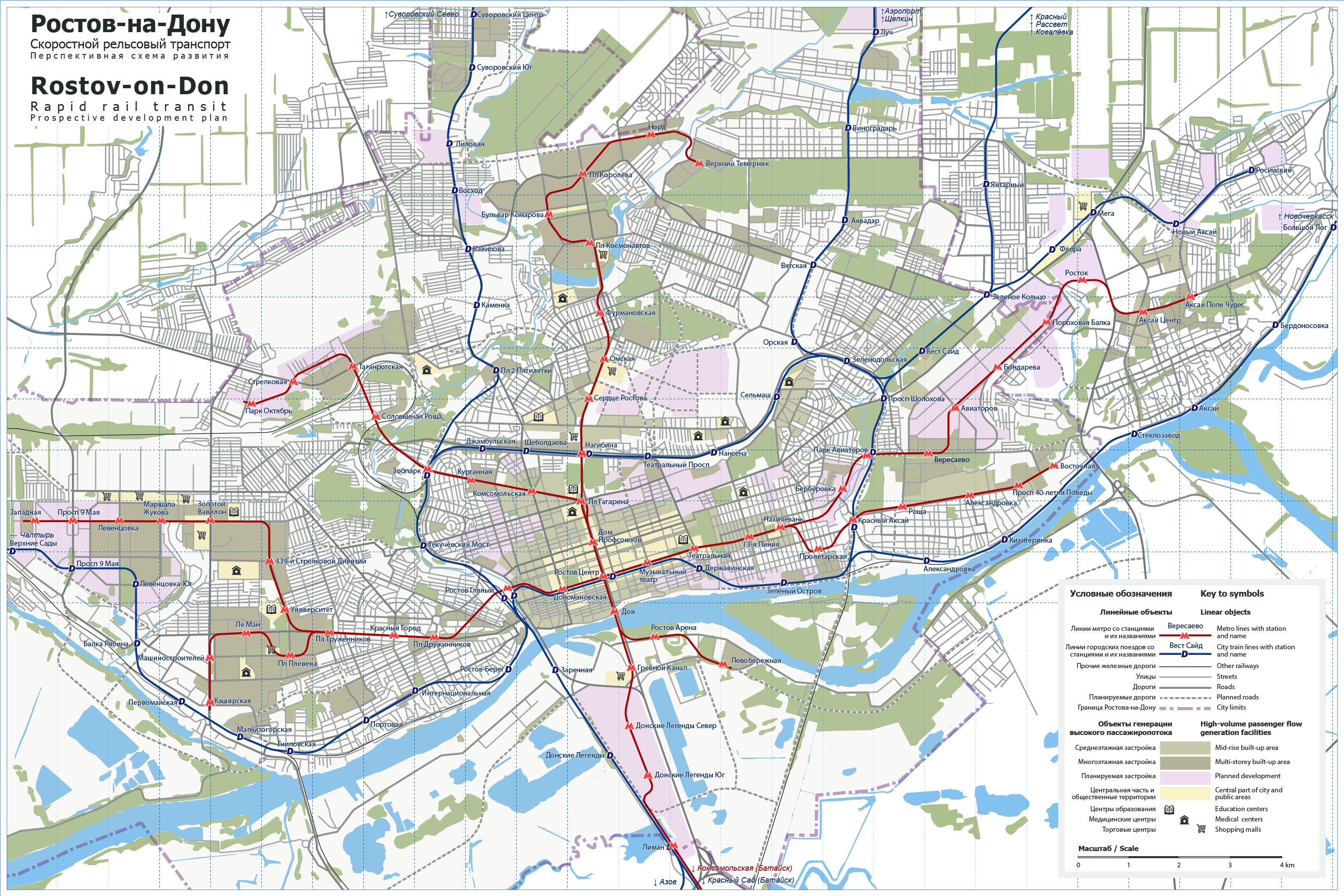
Rostov-on-Don, South Russia. Rapid rail transit plan. Rostov-on-Done is the eleventh-largest city in Russia located on the Don river, with a population of over 1.14 million residents, up to 2 million residents in the urban area. Public transport in Rostov-on-Don includes buses, trolleybuses, trams, and minibuses. Plans for a metro system in the city were drawn up during the 1970s and 1980s. From 2006 onwards, the intention was to upgrade the tram network into a light rail system—featuring underground stations in the city center—by 2025; however, the project has not yet reached the stage of practical implementation. Presented here is an unofficial project for the development of metro lines and the urban railway. Details of the project are to be presented on a separate webpage. |
|
|

|
Samara, Middle Volga. Rapid rail transit concept of 2013 Samara is the ninth-largest city in Russia located at the confluence of the Volga and the Samara rivers, with a population of over 1.15 million residents, up to 1.4 million residents in the urban area. Samara has an extensive tram network covering 70 km and 26 routes, as well as a 13 km metro line with 10 stations. However, the rail public transit system has many shortcomings (worn tracks, insufficient coverage, low speeds, long intervals, and uncomfortable carriages). In 2013, a rapid rail transit concept was developed, one element of which (the network routes) is presented here. The entire concept is planned to be posted on a separate page. |
|
 |
© 2007-2026 Norscand.Net | |